Hello everyone. I’m Yamato Hiranuma.
This time, I would like to look back on how I involved with JUDOs and on the online café I joined this July.
Looking back now, my first connection with JUDOs was not through support such as tatami and judogi. It actually began when Ms. Kawato from JUDOs asked me, “Would you be interested in sharing your experiences and activities in Myanmar?”
At the time, I had only recently started coaching the national team. I had a vague feeling that I wanted to leave some kind of record of what I was seeing, what I was feeling, and what I was doing there. However, I had no clear idea of how I should share those experiences with others.
It was around that time that Ms. Kawato approached me, and I began writing a series called Menden Judo Diary.
To be honest, back then I did not really understand what kind of organization JUDOs was or what exactly it did. It was only after I started writing that I gradually knew about its international coaching seminars and its work sending used judogi and tatami from Japan to people overseas. Over time, those activities also became connected to the work I was doing in Myanmar.
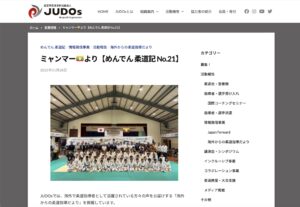
Photo 1: The first edition of “Menden Judo Diary”
The Biggest Challenge I Faced in Myanmar
There were many things I found difficult while coaching judo in Myanmar.
The coaching methods and training culture were also very different from those in Japan.
When I first arrived, training often involved simply running, doing push-ups and sit-ups, and repeating exercises again and again. I often felt that there was still plenty of room to improve the understanding of why a particular exercise was being done.
However, these were things I could change myself.
I could change the training program.
I could teach different techniques.
There were other problems, however, that I could not solve on my own.
Those problems were tatami and judogi.
There were people who wanted to practice judo but did not have a judogi.
There were places where people could train, but there were not enough tatami .
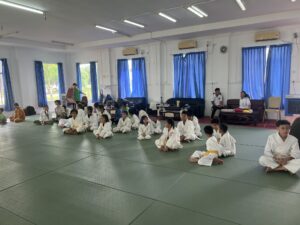
Some children actually practiced judo in T-shirts, and sometimes several people had to share the limited number of judogi available.
Even the national team athletes did not own many judogi. Because they trained almost every day, there were times when they had no choice but to wear the same judogi for several days.
When I was in Japan, I had never thought of putting on a judogi and practicing on tatami as something special.
In Myanmar, however, even those basic things had to be prepared before judo could begin.
At the time, I had a very simple thought:
“If we have one more judogi, one more person can practice judo.”
That was how significant the shortage of equipment felt.
Later, JUDOs provided us with a large number of judogi and tatami . As a result, more children were able to train wearing proper judogi, and members of the national team were able to own more than one.
One judogi may not seem like a major contribution on its own.
But from the perspective of someone who was actually there, I could clearly see that every single judogi created more opportunities for people to practice.
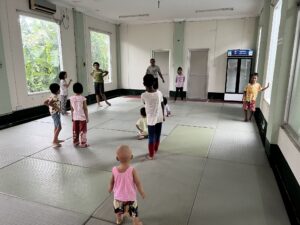
Photo 2: Training in T-shirts before receiving support, and after more judogi became available
It Was People Who Made the Equipment Move
At the same time, receiving those judogi was by no means a simple process.
One major question was:
How could we actually transport judogi from Japan to Myanmar?
This was a much bigger challenge than it might sound.
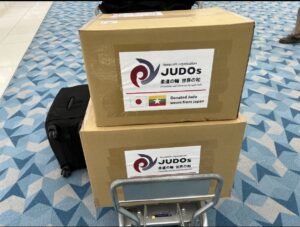
At the time, employees of Japanese companies stationed in Myanmar sometimes carried judogi in their luggage when returning from Japan.
Whenever someone traveled back from a business trip or temporary visit to Japan, they would bring a few more.
Looking back, it was a very slow and painstaking way of doing things.
But through those small efforts, judogi that had once been sitting in Japan eventually reached children in Myanmar.
There were people who collected them.
People who contacted others and coordinated everything.
People who physically carried them.
And finally, people in Myanmar who used them.
On the surface, what we were receiving was material support in the form of tatami mats and judogi.
But in reality, it was people who made those things move.
Photo 3: Judogi being transported to Myanmar with the help of Japanese residents stationed there
Taking Part in the Online Café
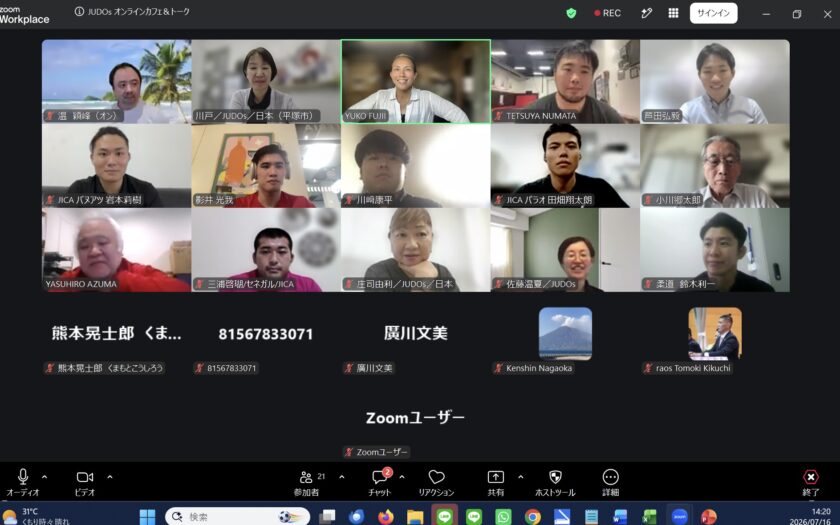
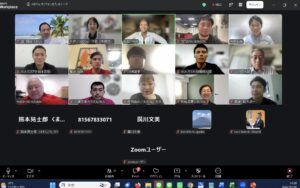
This July, I had the opportunity to join JUDOs’ online café, titled The Reality of Coaching Judo Overseas.
People from many different backgrounds participated, including coaches currently working overseas and university students who were interested in going abroad in the future.
What stayed with me most was not one particular person’s story.
It was the fact that so many different people had come together because of judo.
In everyday life, we all live in different places.
The reasons we went overseas are different, and the ways we are involved with judo are different as well.
Yet simply because we share judo as a common connection, we are able to come together and talk.
One of the topics discussed during the online café was how to “turn an away environment into a home environment.”
During my own time living in Canada and Myanmar, one thing I tried to do was live as much as possible in the same way as the local people.
Eat the same food.
Live in the same environment.
And, as much as possible, speak the local language.
In Myanmar especially, learning to speak Burmese made a major difference for me.
Of course, no matter how long I lived there, the differences between being Japanese and being Myanmar would never completely disappear.
Our cultures were different.
Our religions were different.
Even our attitudes toward money could be different.
But by living together despite those differences and communicating in their language, I was gradually able to build trust.
One of the things I learned through actually living overseas was that skills and knowledge alone are not enough when you want to accomplish something in another country.
Photo 4: The JUDOs online café
There Is More Than One Way to Go Overseas
As I watched the university students who were interested in going abroad, I found myself wondering what I would have asked if a place like this had existed when I was a university student.
I probably would have asked:
“How did all of you actually end up going overseas?”
If you search online for ways to go abroad, you will find many established routes: studying overseas, finding a job abroad, joining an international cooperation program, and so on.
Those are, of course, perfectly valid options.
But when you actually talk to people who are working overseas, you realize that everyone arrived there in a different way.
In my own case, I did not search for a job vacancy because I had decided that I wanted to work in Myanmar.
I was given an opportunity through relationships with other people, and that eventually led to coaching overseas.
That is why, if I were speaking to someone who wants to go abroad, I would first encourage them to go to different places and meet people.
Join an event.
Go and meet someone whose work interests you.
If there is something you can help with, offer to help.
Doing this costs time and sometimes money, and there may be occasions when nothing comes from it.
But later on, you may find yourself thinking, “That person I met back then was the beginning of everything.”
That has happened to me many times.
JUDOs, for example, runs an international coaching seminar.
For someone who hopes to work overseas, one option might be to join the seminar first as a staff member and actually meet judoka from other countries.
Practice judo together.
Eat together.
Talk together.
Something may come from those encounters.
Of course, perhaps nothing will.
But at the very least, you will meet people you would never encounter by simply searching for information about working overseas on the internet.
Closing Thoughts
Looking back on everything from my first connection with JUDOs to the online café, I was reminded once again of how much my life today has been shaped by the people I have met and the relationships I have built.
Going to Myanmar, becoming connected with JUDOs there, and receiving support in the form of judogi and tatami mats were not things I had planned from the beginning.
Rather, I met people at different stages, was given opportunities, and tried to take action in my own way. One step gradually led to another.
Of course, sustaining judo requires more than just people. It also requires equipment and financial resources.
But the ones who bring those resources to the places where they are needed, who start new activities, and who connect one person to the next are, in the end, people.
I have been fortunate to receive help from many people throughout my own journey, and because of them I have been able to experience many things.
That is why, moving forward, I hope I can do more than simply teach someone or provide support.
I would also like to connect people with one another, and perhaps help create opportunities that allow someone else to take their next step.
I have only recently started becoming involved in JUDOs’ activities, so to be honest, I still do not know exactly what I will be able to contribute.
For now, I want to take part in different activities, see things with my own eyes, meet and work with people directly, and continue thinking about what I can do in my own way.
Next time, I would also like to write about some of the activities I have actually taken part in as a member of the JUDOs staff.